I build tools for my own AI agents, and share them openly with everyone.
Each of these began as a genuine frustration within my own system, and each taught me something I had not known before. If a tool proved useful to me, I believe it may well prove useful to someone else.
I believe technology should lighten the load we carry.
Paperwork, scattered notes and opaque processes wear people down; I have watched it happen to clients and experienced it myself. AI is the most effective remedy for that burden I have encountered. Arcturion Technologies is my workshop for building tools that bring your information together, state candidly where they are uncertain, and make the next step unmistakable.
I care especially about people who feel overwhelmed by process, and about those whose minds simply work differently. Every tool here began with a real problem and improves with each round of testing.
These are tools in active development, not finished products.
For seven years I kept Konexion’s books, largely in QuickBooks, and throughout that time I wanted the software to tell me why. I am now building a desktop accounting application with an AI assistant that explains your numbers. It is local-first on the Mac, with reconciliation built in.
The demonstration runs genuine backend functions against a fictional six-transaction ledger. The matching statement reconciles, and the incorrect balance is blocked.
This is the home of my AI agents. They share knowledge, work with real tools and pause at a checkpoint wherever my judgment is required. The most difficult challenge proved to be coordination, so every task now carries its context, an owner and a defined point at which it returns to me. The walkthrough uses sample requests.
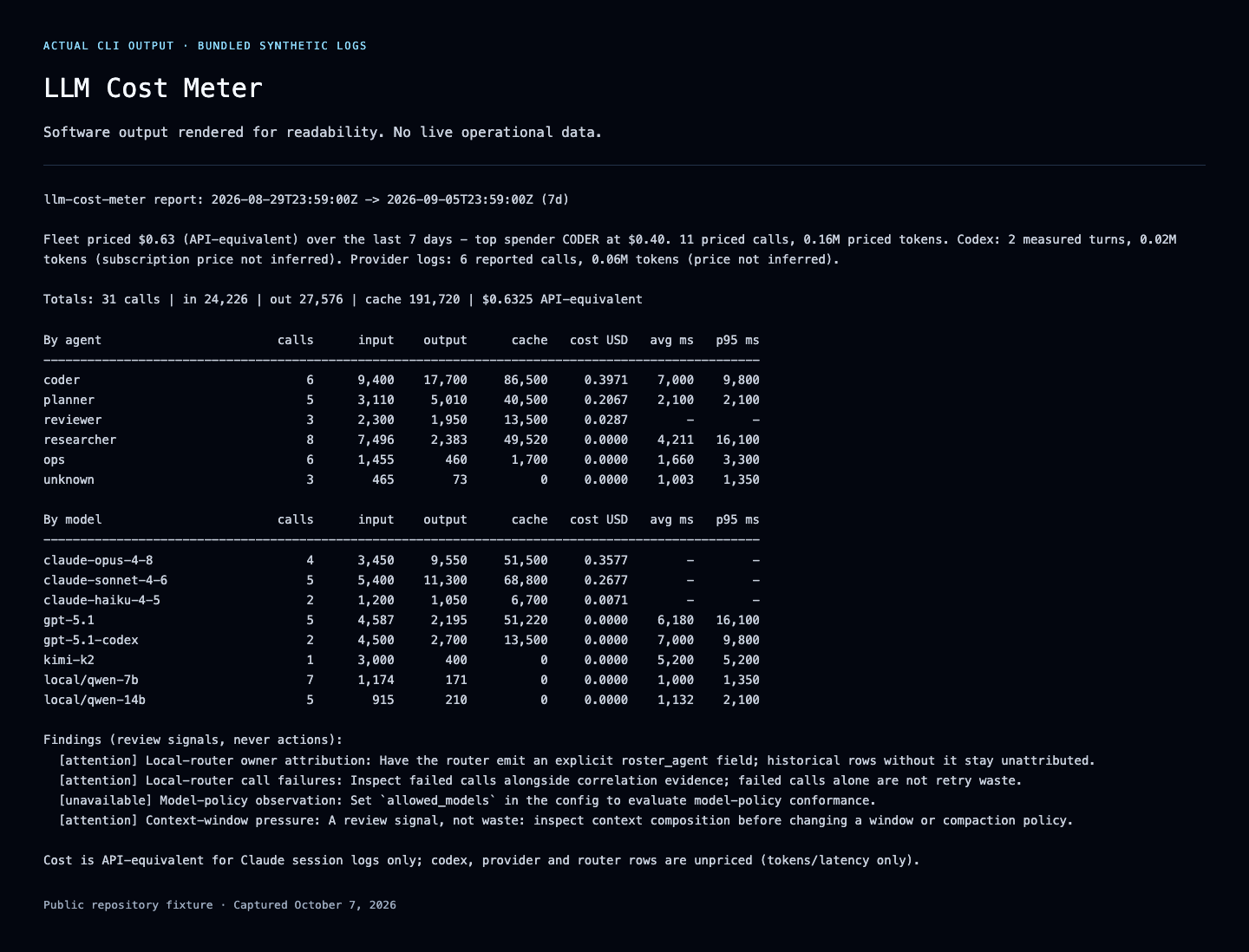
I wanted to see precisely where my AI usage was going. The meter reads usage logs and reports tokens, speed, consumption by agent and estimated cost. The demonstration uses bundled sample logs, so its dollar figures are estimates, not actual spending.
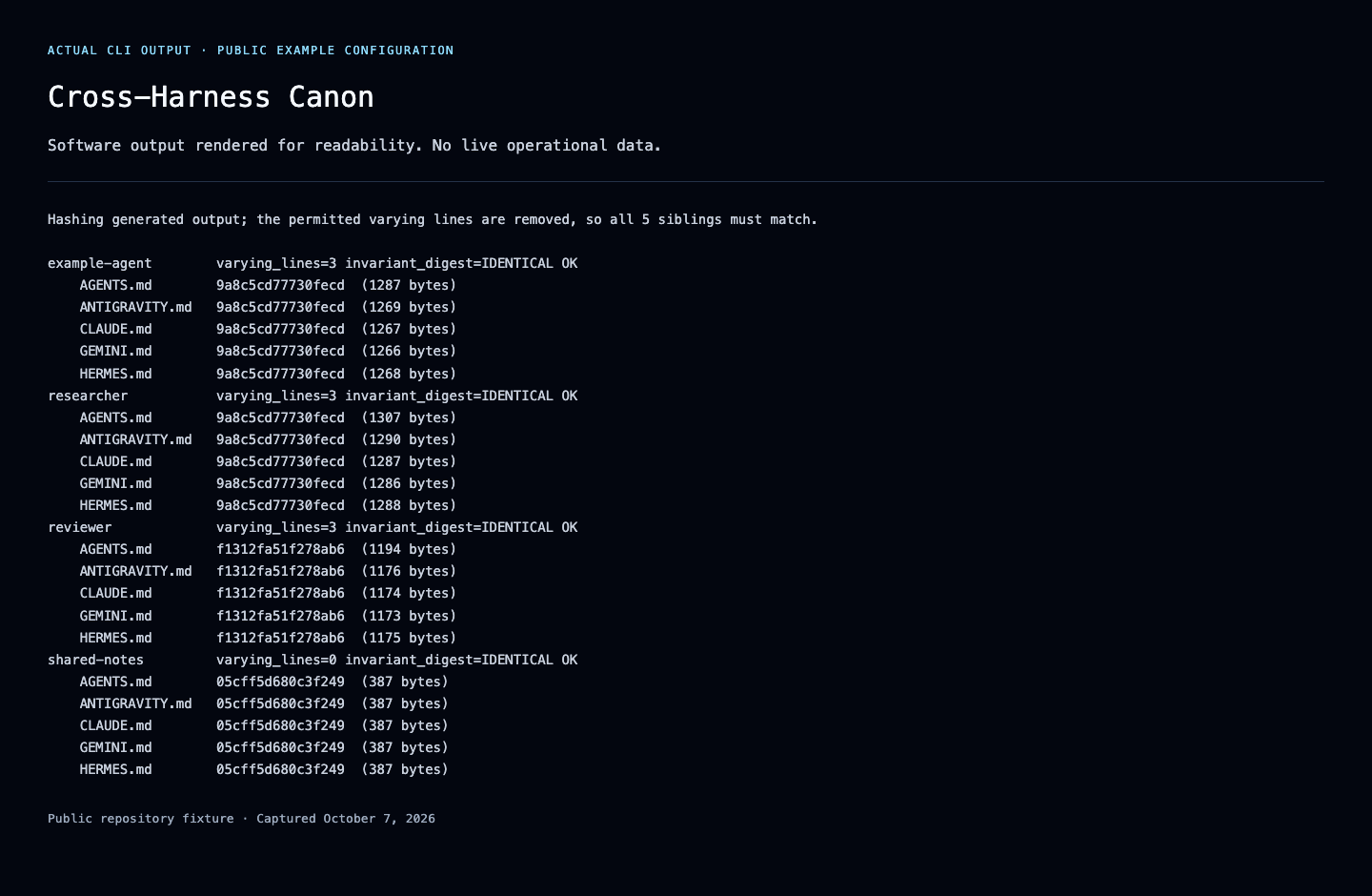
Write your agent’s instructions once and receive matching files for Claude Code, Codex, Gemini, Hermes and Antigravity. It alerts you whenever they drift apart.
Scope & limits. Consistent files do not, by themselves, prove consistent model behavior.
Small interventions that improve every session, including awareness of the actual time, answers proportioned to the question, model-specific guidance and a loop guard for agents that begin repeating themselves. If a hook stalls, it times out rather than freezing your session.
Scope & limits. These are behavior aids, not a guarantee of safe or correct reasoning.
A Claude Code plugin for locating the right code quickly, with a local symbol index, reusable scaffolds, skill linting and a budget-capped second-opinion review.
Scope & limits. The index uses patterns rather than a compiler.
Control your music through your AI, including search, playback, library and playlists. Any destructive action is previewed first and requires confirmation before it runs.
Scope & limits. Spotify authorization is required. Playback needs Premium and an active device.
A native Swift bridge between your AI and Apple Reminders that lists, finds, creates, updates, completes and moves reminders. Deletions always require confirmation.
Scope & limits. Requires macOS and Reminders permission.
A read-only meter for AI usage that reports tokens, speed and efficiency by agent and model. Measured, estimated and unknown figures are always kept separate.
Scope & limits. This is visibility into recorded activity, not a billing statement.
Agents begin every session fully oriented, because shared instructions and a code index load first.
You can see what an agent intends to do. Every connector states its actions plainly and previews anything consequential.
Each task is routed to the appropriate model, which reserves the largest models for the hardest problems.
Everything is verified. Tests, saved outputs, reviews and usage reports show me what to improve next.
I own the vision, the requirements, the design and the final review, while AI writes most of the code.
What I can demonstrate today.
Arcturion Finance passed 45 selected backend tests on October 4, 2026, using sample records. The cross-harness generator passed 33 tests on October 6.
The next stage is to place complete workflows in the hands of real users. I will be watching for clear language, straightforward ways to undo a mistake, and a review step that genuinely catches errors.